Enterprise AI Technology Stack
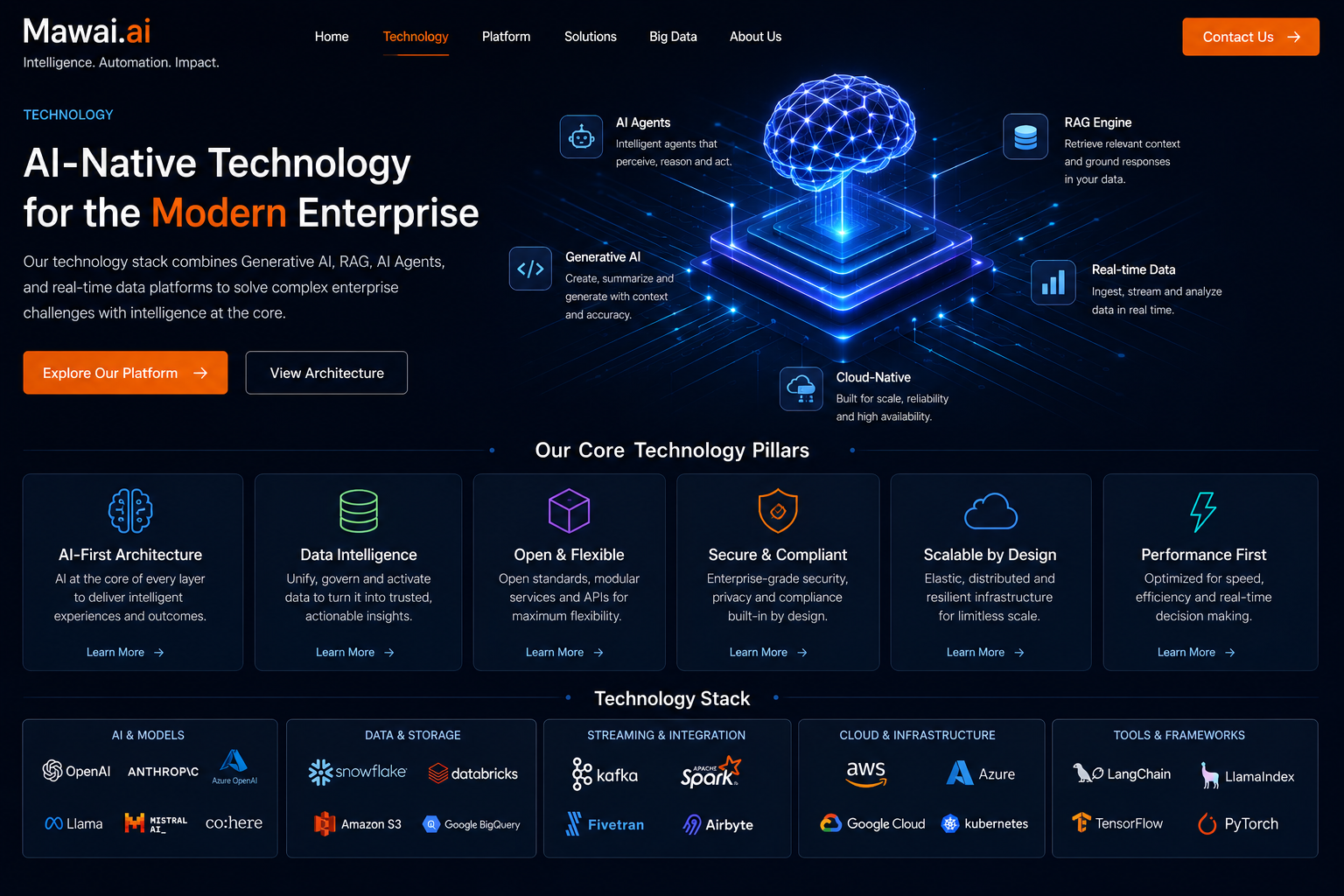
Mawai.ai builds enterprise-grade AI platforms focused on operational automation, enterprise intelligence, scalable AI infrastructure, and secure data-driven workflows. Our technology strategy combines Generative AI, RAG architecture, AI agents, enterprise integrations, data engineering, cloud-native scalability, and advanced analytics.
Generative AI & LLM Platforms
Large Language Models help enterprises automate reasoning, content generation, operational analysis, and workflow support.
- AI copilots for IT, HR, finance, and customer support.
- Automated operational summaries and executive reporting.
- AI-driven multilingual support systems.
- Natural-language interaction with enterprise systems.
- Enterprise workflow assistance using AI copilots.
RAG & Enterprise Knowledge AI
Retrieval-Augmented Generation (RAG) enables AI systems to retrieve trusted enterprise data before generating responses.
- AI search across SharePoint, tickets, PDFs, and ERP systems.
- Engineering troubleshooting copilots using historical incidents.
- Enterprise-wide semantic document search.
- Secure internal knowledge assistants with role-based access.
- AI-powered policy and compliance retrieval systems.
AI Agents & MCP Architecture
AI agents can automate workflows, interact with APIs, retrieve operational data, and orchestrate enterprise processes.
- AI agents managing ticket routing and incident escalation.
- Procurement automation using AI workflow agents.
- MCP-based orchestration for multi-system enterprise automation.
- CRM, ERP, HR, and finance platform integration.
- Cross-system workflow execution using AI orchestration.
SAP & ERP AI Automation
Connecting AI into ERP systems significantly improves enterprise operational efficiency and visibility.
- AI invoice extraction and reconciliation.
- Predictive supply chain and procurement analytics.
- Natural-language ERP querying.
- Financial anomaly detection and forecasting.
- Operational intelligence dashboards powered by AI.
Data Lakes & AI Analytics
Enterprise AI depends on scalable and reliable enterprise data architecture.
- Snowflake-based enterprise analytics modernization.
- Unified enterprise data lakes for AI readiness.
- Real-time analytics and operational KPI monitoring.
- Vector databases for semantic AI search.
- Enterprise observability and reporting pipelines.
Cloud Infrastructure & Scalability
Enterprise AI platforms require secure and scalable cloud-native infrastructure.
- Kubernetes and containerized AI deployment.
- Cloud-native architecture across AWS, Azure, and GCP.
- High-availability enterprise database systems.
- Real-time AI observability and monitoring.
- Scalable API infrastructure for enterprise integration.
Enterprise AI Transformation
Enterprise AI is not only about deploying chatbots. Successful AI transformation requires secure enterprise architecture, workflow integration, governance, operational scalability, and measurable business impact.
Mawai.ai focuses on operational AI implementation — integrating AI into ERP systems, enterprise workflows, customer operations, analytics pipelines, and internal knowledge systems.
This enables organizations to reduce operational overhead, accelerate decision-making, improve visibility, and modernize enterprise operations using practical AI systems.
Enterprise AI Technology Stack
Mawai.ai builds enterprise-grade AI platforms focused on operational automation, enterprise intelligence, scalable AI infrastructure, and secure data-driven workflows. Our technology strategy combines Generative AI, RAG architecture, AI agents, enterprise integrations, data engineering, cloud-native scalability, and advanced analytics.
Generative AI & LLM Platforms
Large Language Models help enterprises automate reasoning, content generation, operational analysis, and workflow support.
- AI copilots for IT, HR, finance, and customer support.
- Automated operational summaries and executive reporting.
- AI-driven multilingual support systems.
- Natural-language interaction with enterprise systems.
- Enterprise workflow assistance using AI copilots.
RAG & Enterprise Knowledge AI
Retrieval-Augmented Generation (RAG) enables AI systems to retrieve trusted enterprise data before generating responses.
- AI search across SharePoint, tickets, PDFs, and ERP systems.
- Engineering troubleshooting copilots using historical incidents.
- Enterprise-wide semantic document search.
- Secure internal knowledge assistants with role-based access.
- AI-powered policy and compliance retrieval systems.
AI Agents & MCP Architecture
AI agents can automate workflows, interact with APIs, retrieve operational data, and orchestrate enterprise processes.
- AI agents managing ticket routing and incident escalation.
- Procurement automation using AI workflow agents.
- MCP-based orchestration for multi-system enterprise automation.
- CRM, ERP, HR, and finance platform integration.
- Cross-system workflow execution using AI orchestration.
SAP & ERP AI Automation
Connecting AI into ERP systems significantly improves enterprise operational efficiency and visibility.
- AI invoice extraction and reconciliation.
- Predictive supply chain and procurement analytics.
- Natural-language ERP querying.
- Financial anomaly detection and forecasting.
- Operational intelligence dashboards powered by AI.
Data Lakes & AI Analytics
Enterprise AI depends on scalable and reliable enterprise data architecture.
- Snowflake-based enterprise analytics modernization.
- Unified enterprise data lakes for AI readiness.
- Real-time analytics and operational KPI monitoring.
- Vector databases for semantic AI search.
- Enterprise observability and reporting pipelines.
Cloud Infrastructure & Scalability
Enterprise AI platforms require secure and scalable cloud-native infrastructure.
- Kubernetes and containerized AI deployment.
- Cloud-native architecture across AWS, Azure, and GCP.
- High-availability enterprise database systems.
- Real-time AI observability and monitoring.
- Scalable API infrastructure for enterprise integration.
Enterprise AI Transformation
Enterprise AI is not only about deploying chatbots. Successful AI transformation requires secure enterprise architecture, workflow integration, governance, operational scalability, and measurable business impact.
Mawai.ai focuses on operational AI implementation — integrating AI into ERP systems, enterprise workflows, customer operations, analytics pipelines, and internal knowledge systems.
This enables organizations to reduce operational overhead, accelerate decision-making, improve visibility, and modernize enterprise operations using practical AI systems.
Enterprise AI Technology Stack
Mawai.ai builds enterprise-grade AI platforms focused on operational automation, enterprise intelligence, scalable AI infrastructure, and secure data-driven workflows. Our technology strategy combines Generative AI, RAG architecture, AI agents, enterprise integrations, data engineering, cloud-native scalability, and advanced analytics.
Generative AI & LLM Platforms
Large Language Models help enterprises automate reasoning, content generation, operational analysis, and workflow support.
- AI copilots for IT, HR, finance, and customer support.
- Automated operational summaries and executive reporting.
- AI-driven multilingual support systems.
- Natural-language interaction with enterprise systems.
- Enterprise workflow assistance using AI copilots.
RAG & Enterprise Knowledge AI
Retrieval-Augmented Generation (RAG) enables AI systems to retrieve trusted enterprise data before generating responses.
- AI search across SharePoint, tickets, PDFs, and ERP systems.
- Engineering troubleshooting copilots using historical incidents.
- Enterprise-wide semantic document search.
- Secure internal knowledge assistants with role-based access.
- AI-powered policy and compliance retrieval systems.
AI Agents & MCP Architecture
AI agents can automate workflows, interact with APIs, retrieve operational data, and orchestrate enterprise processes.
- AI agents managing ticket routing and incident escalation.
- Procurement automation using AI workflow agents.
- MCP-based orchestration for multi-system enterprise automation.
- CRM, ERP, HR, and finance platform integration.
- Cross-system workflow execution using AI orchestration.
SAP & ERP AI Automation
Connecting AI into ERP systems significantly improves enterprise operational efficiency and visibility.
- AI invoice extraction and reconciliation.
- Predictive supply chain and procurement analytics.
- Natural-language ERP querying.
- Financial anomaly detection and forecasting.
- Operational intelligence dashboards powered by AI.
Data Lakes & AI Analytics
Enterprise AI depends on scalable and reliable enterprise data architecture.
- Snowflake-based enterprise analytics modernization.
- Unified enterprise data lakes for AI readiness.
- Real-time analytics and operational KPI monitoring.
- Vector databases for semantic AI search.
- Enterprise observability and reporting pipelines.
Cloud Infrastructure & Scalability
Enterprise AI platforms require secure and scalable cloud-native infrastructure.
- Kubernetes and containerized AI deployment.
- Cloud-native architecture across AWS, Azure, and GCP.
- High-availability enterprise database systems.
- Real-time AI observability and monitoring.
- Scalable API infrastructure for enterprise integration.
Enterprise AI Transformation
Enterprise AI is not only about deploying chatbots. Successful AI transformation requires secure enterprise architecture, workflow integration, governance, operational scalability, and measurable business impact.
Mawai.ai focuses on operational AI implementation — integrating AI into ERP systems, enterprise workflows, customer operations, analytics pipelines, and internal knowledge systems.
This enables organizations to reduce operational overhead, accelerate decision-making, improve visibility, and modernize enterprise operations using practical AI systems.